About Indonesia
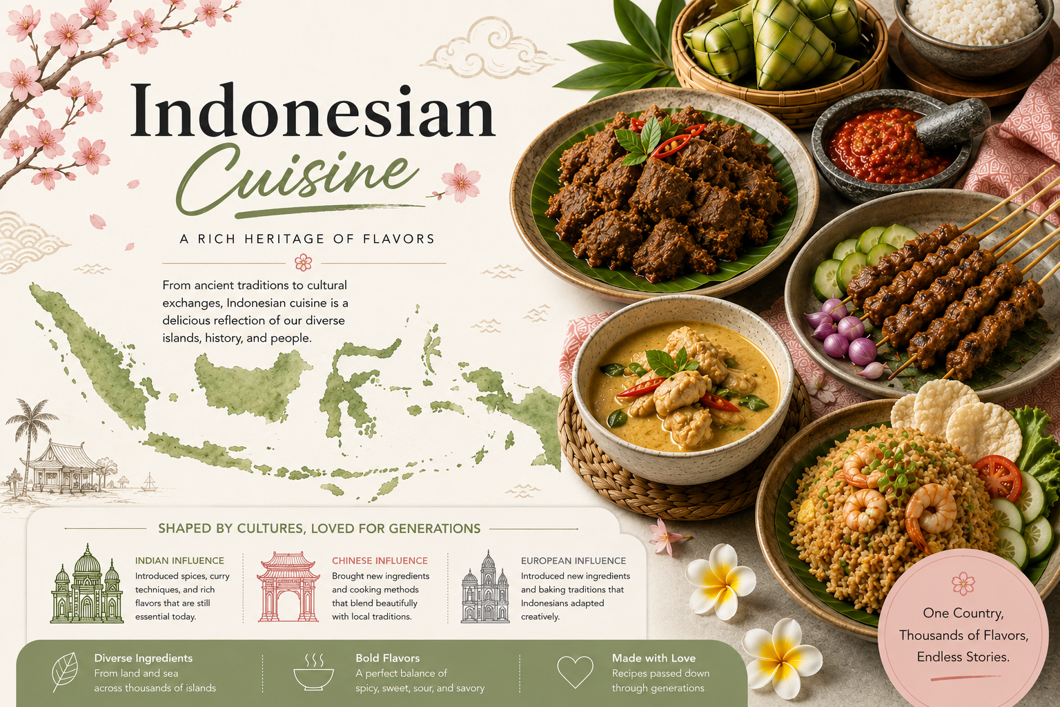
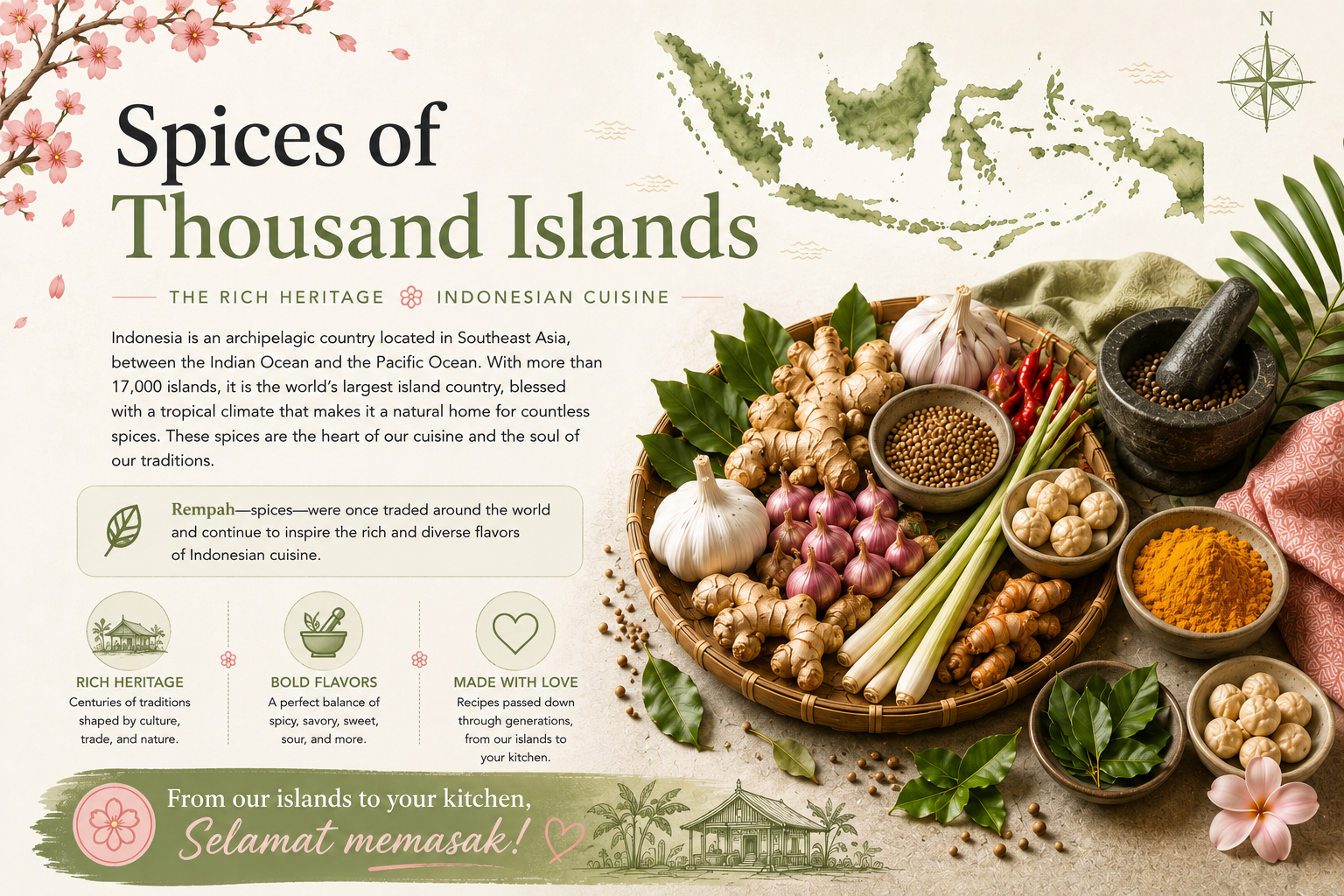
Indonesia is an archipelagic country located in Southeast Asia, between the Indian Ocean and the Pacific Ocean. With more than 17,000 islands, it is the world’s largest island country. Its main islands include Sumatra, Java, Kalimantan, Sulawesi, and Western New Guinea.
Because Indonesia lies near the equator, it has a mostly tropical climate. This makes the country a natural home for many spices. In Indonesian, spices are called rempah. During the 16th century, spices were highly valuable and became an important part of global trade, much like energy resources are today.
Spices are one of the reasons Indonesian cuisine has such rich and complex flavours. Many Indonesian dishes are savoury, hot, and spicy, while some regional dishes combine sweet, salty, sour, and spicy flavours in one meal.
Below are some of the most commonly used spices and ingredients in Indonesian cooking. These ingredients are often found in almost every Indonesian pantry.
Common Spices and Ingredients in Indonesian Cooking
Garlic
Indonesian: Bawang Putih
Garlic has a strong, pungent flavour that comes from its natural sulfur compounds. These compounds have a significant impact on meat dishes, which also contain sulfur-based flavours.
Chopping or crushing garlic releases allicin, the compound most commonly associated with garlic’s distinctive aroma and flavour. After crushing or chopping garlic, letting it sit for about 60 seconds can help increase the allicin level. Garlic should not be cooked over very high heat, especially above 180°C, as this can reduce its flavour and aroma.
Shallots or Red Shallots
Indonesian: Bawang Merah
Like garlic, shallots contain sulfur compounds that create their distinctive flavour and aroma. When shallots are cut or crushed, enzymes are released and convert these compounds into strong-smelling substances. This is also what can make your eyes water when cutting shallots.
Shallots are one of the most important ingredients in Indonesian cooking. They are often used as the base for spice pastes, sambals, soups, curries, and stir-fried dishes.
Ginger
Indonesian: Jahe
Ginger was one of the first Asian spices to arrive in Europe, around the 4th century. It has a warm, spicy, citrusy, and slightly woody flavour.
To get the best flavour from fresh ginger, peel it shortly before use. This helps retain its fragrant oils and complex aroma. Ginger is commonly used in soups, curries, stir-fries, marinades, and herbal drinks.
Turmeric
Indonesian: Kunyit
Turmeric has an earthy, pungent flavour and a deep yellow colour. It can help bind and balance other flavours, but when used too much on its own, it can taste bitter.
Curcumin, the main pigment in turmeric, gives many Asian dishes their bright yellow colour. Frying turmeric in oil or fat above 130°C can help create new flavour compounds. However, the same effect does not occur when turmeric is boiled in water.
Turmeric is commonly used in Indonesian curries, yellow rice, soups, spice pastes, and marinades.
Bay Leaves
Indonesian: Daun Salam
Indonesian bay leaves add a fragrant, warm, slightly sweet, and mildly spicy flavour to dishes. Their flavour is deep within the leaf, which is why dried leaves can still be effective.
The flavour of bay leaves dissolves well in oil, fat, and alcohol, but less effectively in water. When used in water-based dishes, they need time to release their aroma. Indonesian cooks often add fresh or dried bay leaves to meat dishes, vegetable curries, rice, stews, and soups.
Candlenut
Indonesian: Kemiri
Candlenut adds a rich, nutty flavour and creamy texture to many Indonesian dishes. It is often crushed or roasted before being added to spice pastes.
Candlenut also works as a natural thickening agent, especially in soups, curries, and stews. If candlenut is not available, macadamia nuts can be used as a substitute. Candlenut should not be eaten raw, as it can be toxic before cooking. The toxicity is reduced when it is properly cooked.
Galangal
Indonesian: Lengkuas
Galangal, also known as Siamese ginger, belongs to the ginger family. It has a sharp, spicy, and aromatic flavour, with notes similar to ginger, cardamom, and saffron.
Galangal is often added to meat dishes, soups, and curries. When slow-cooked, it enhances other flavours while retaining its own distinctive aroma. Its bright and spicy character makes it especially suitable for many Southeast Asian soups and broths.
Lemongrass
Indonesian: Sereh
Lemongrass has a citrusy, floral, slightly sweet, and spicy flavour. To release its aroma, the stalk is usually bruised or gently bent before being added to cooking.
It is commonly used in stocks, soups, curries, and dishes cooked with coconut milk or fat. Lemongrass is also used in traditional herbal drinks and is often believed to help warm the body.
Coriander Seed
Indonesian: Ketumbar
Coriander seed has a warm, bittersweet flavour with notes similar to dried orange peel. Grinding coriander seeds helps release their natural oils and aroma.
Dry-frying or toasting coriander seeds brings out a nutty and earthy flavour. If left untoasted, coriander has a fresher, greener, and more floral taste. It is commonly used in spice pastes, marinades, curries, fried chicken seasoning, and soups.
Kaffir Lime Leaves
Indonesian: Daun Jeruk
Kaffir lime is a citrus fruit commonly grown in tropical Southeast Asia. Its leaves are widely used in Indonesian cooking for their fresh citrus aroma.
Kaffir lime leaves are often added to soups, curries, stir-fries, sauces, and sambals. Their mild citrus flavour is especially useful for enhancing coconut-based broths and fish dishes. Gently bruising or tearing the leaves before cooking helps release their aroma and flavour.