History
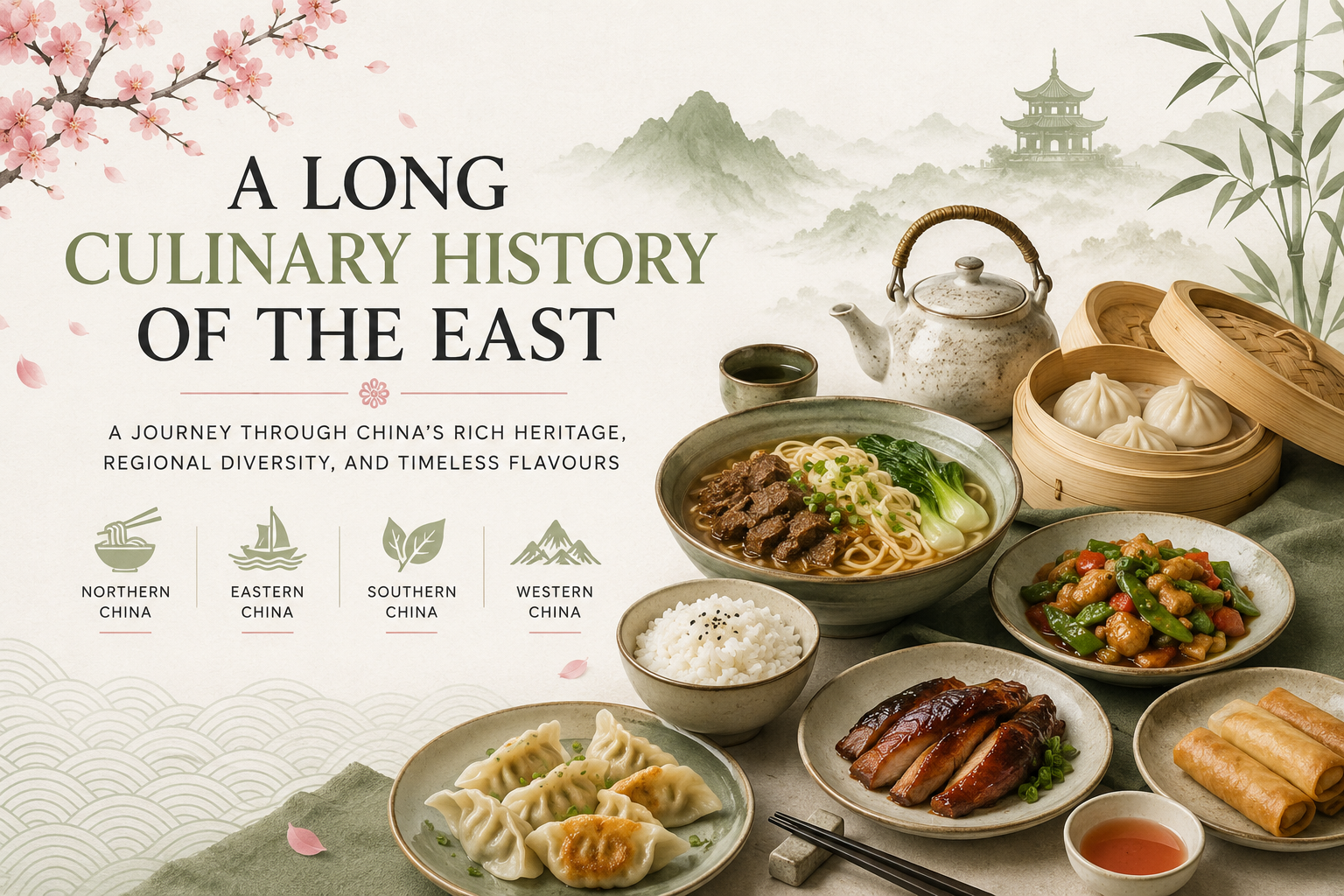
Chinese cuisine has evolved over thousands of years, shaped by ancient dynasties, regional geography, trade, and deep philosophical traditions. At the heart of Chinese cooking is the idea of balance, often reflected through the concept of yin and yang. This balance is not only about flavour, but also about nutrition, texture, temperature, and how food supports the body. Over time, iconic ingredients such as soy sauce became essential to Chinese cooking, while techniques such as steaming, stir-frying, braising, roasting, and noodle-making continued to develop and refine.
Chinese cuisine was also influenced by the movement of people, goods, and ideas. Trade routes such as the Silk Road introduced new spices, ingredients, and cooking styles from Central Asia and beyond. Contact with Southeast Asia brought additional flavours and ingredients, while later European contact introduced crops such as chilli peppers, tomatoes, and potatoes. These external influences blended with local traditions, helping Chinese cuisine become even more diverse, adaptable, and rich in flavour.
At the same time, Chinese cooking has greatly influenced many other food cultures. Ingredients and dishes such as tofu, noodles, dumplings, and steamed buns spread across Asia and inspired many local variations. Chinese noodle-making, in particular, became one of the most influential culinary traditions, shaping the way many cultures prepare and enjoy noodle-based dishes today. Through migration, trade, and cultural exchange, Chinese cuisine has travelled far beyond China and continues to influence kitchens around the world.
Chinese Cuisine by Region
Northern China
Northern China is known for its cold climate, vast plains, valleys, hills, and mountainous regions. In many areas, winters can be long and harsh, with landscapes often covered in ice and snow. This environment has strongly shaped the way people cook and eat in the north.
Unlike southern regions, where rice is more common, Northern China relies heavily on wheat-based staples. This is why noodles, dumplings, steamed buns, pancakes, and flatbreads are important parts of everyday meals. These foods are filling, practical, and well suited to colder weather.
Northern Chinese dishes are often hearty, warming, and rich in flavour. Cooking methods such as boiling, steaming, roasting, and braising are commonly used. Dumplings, or jiaozi, are among the most famous foods from the region and are often filled with meat and vegetables. Noodles are also widely eaten, from hand-pulled noodles to thick wheat noodles served in soups or stir-fried dishes.
The cuisine is also known for its use of stronger seasonings such as garlic, spring onions, vinegar, soy sauce, and sesame oil. In some areas, especially closer to Inner Mongolia and the northwest, lamb and beef are commonly used, often cooked with bold spices or roasted over fire.
Overall, Northern Chinese cuisine reflects the region’s climate and geography. It is practical, comforting, and deeply satisfying, with wheat-based foods and warming dishes at the centre of the table.
Eastern China
Eastern China is known for its lush wetlands, fertile river deltas, coastal areas, and long history of farming, fishing, and trade. The region has access to rich agricultural land, as well as rivers, lakes, and the sea, all of which have strongly shaped its cuisine.
Because of its fertile environment, rice is one of the main staples in Eastern China. The region is also known for fresh seafood, river fish, crabs, prawns, vegetables, and seasonal produce. These ingredients allow Eastern Chinese cuisine to focus on freshness, balance, and natural flavour.
Compared with the hearty, wheat-based dishes of Northern China, Eastern Chinese food is often lighter, more refined, and more delicate. Cooking methods such as steaming, braising, simmering, and quick stir-frying are commonly used to preserve the original taste of the ingredients.
The flavour profile is usually gentle and balanced, often combining savoury, slightly sweet, and umami flavours. Ingredients such as soy sauce, rice wine, vinegar, ginger, spring onions, and sugar are often used to create depth without overpowering the main ingredient.
Eastern China is also strongly connected to trade and cultural exchange. Its coastal cities and river networks helped ingredients, cooking techniques, and food traditions move between regions. This gave Eastern Chinese cuisine a refined and diverse character, with dishes that often highlight elegance, freshness, and careful preparation.
Overall, Eastern Chinese cuisine reflects the richness of its land and waterways. It is shaped by rice fields, rivers, lakes, the sea, and centuries of farming, fishing, and trade.
Southern China
Southern China is known for its warm climate, fertile wetlands, rivers, and abundant rainfall. The region’s natural environment supports rice farming, fresh vegetables, tropical fruits, and a wide variety of seafood. This has shaped a cuisine that values freshness, balance, and the natural taste of ingredients.
Rice is the main staple in Southern China. It is commonly served with vegetables, fish, poultry, pork, and light soups. Because the region has access to many fresh ingredients, Southern Chinese cuisine often focuses on simple preparation and clean flavours rather than heavy seasoning.
The food in Southern China is often lighter and more delicate compared with the stronger, wheat-based dishes of Northern China. Steaming, stir-frying, roasting, and slow simmering are common cooking methods. These techniques help preserve the texture, colour, and natural sweetness of the ingredients.
Southern Chinese cuisine is also known for its wide variety of dishes and ingredients. In coastal areas, seafood plays an important role, while inland areas use more pork, chicken, duck, vegetables, mushrooms, and herbs. The flavours are usually mild, fresh, savoury, and sometimes slightly sweet.
One of the most famous styles from Southern China is Cantonese cuisine, which is known for dim sum, roasted meats, clear soups, steamed fish, and delicate stir-fries. Cantonese cooking places great importance on freshness and careful preparation, allowing the quality of the ingredients to stand out.
Overall, Southern Chinese cuisine reflects the region’s warm and fertile landscape. It is fresh, varied, and elegant, with rice, seafood, vegetables, and gentle seasoning at the heart of many dishes.
Western China
Western China covers a vast and dramatic landscape shaped by mountains, highlands, rivers, forests, grasslands, and historic trade routes. The region is known for its natural beauty, with fertile areas, meandering rivers, majestic lakes, and mountain ranges that influence how people live, travel, farm, and cook.
Because Western China is geographically large and culturally diverse, its cuisine is also rich and varied. The food is influenced by different ethnic groups, local farming traditions, and the movement of people along ancient trade routes such as the Silk Road. This history brought new spices, ingredients, and cooking styles into the region.
Compared with the lighter cuisines of Eastern and Southern China, Western Chinese food is often bolder, heartier, and more aromatic. Lamb, beef, wheat, noodles, flatbreads, dairy products, and spices are commonly used in many areas. In some regions, grilled meats, hand-pulled noodles, dumplings, and breads are important everyday foods.
The flavour profile of Western Chinese cuisine is often strong and warming. Ingredients such as cumin, chilli, garlic, onions, and dried spices are commonly used, especially in areas influenced by Central Asian cooking. These flavours create dishes that are fragrant, savoury, and satisfying.
Western Chinese cuisine also reflects the needs of people living in mountainous, highland, and inland areas. Foods are often practical, filling, and suitable for long journeys or colder climates. Grilled lamb skewers, noodle soups, flatbreads, and slow-cooked meat dishes are examples of foods that match this lifestyle.
Overall, Western Chinese cuisine reflects the region’s vast landscape, cultural diversity, and long history of trade. It is bold, hearty, aromatic, and deeply connected to the land and the people who live there.
Long History
Chinese cuisine is more than a collection of dishes. It is a reflection of China’s long history, vast geography, cultural diversity, and deep respect for balance in food. From the wheat-based comfort dishes of Northern China to the refined seafood and rice dishes of Eastern China, from the fresh and delicate flavours of Southern China to the bold and aromatic cooking of Western China, each region tells its own story through food.
What makes Chinese cuisine special is how it brings together flavour, texture, nutrition, and tradition. It continues to evolve while still preserving the cooking wisdom passed down through generations. Through trade, migration, and cultural exchange, Chinese food has also influenced many other cuisines around the world.
Today, Chinese cuisine remains one of the most loved and recognised food cultures globally. Whether through noodles, dumplings, buns, tofu, rice dishes, soups, or stir-fries, it offers a rich culinary journey that connects people to history, family, and everyday life.